
Cracks spreading? Structural damage compounds fast -- don't wait on foundation cracks. +1-866-476-1348
Home
Services ▼
#HeaderServicesLinks
+1-866-476-1348

Foundation Crack Repair in Miller Place, NY

Specialty
Structural Crack Repair
Methods
Epoxy + Carbon Fiber
Coverage
All of NY
Call for Assessment
Structural
Specialists

Structural Engineering

Foundation analysis and repair design

Epoxy Injection

Permanent structural crack bonding

Carbon Fiber Repair

Bowing wall stabilization systems

10-Year Warranty

Written coverage on all repair work

Foundation Crack Repair: What Every Homeowner Needs to Know

Foundation cracks are not all equal -- their orientation, width, location, and rate of growth determine whether they represent a minor sealing concern or a structural emergency requiring immediate engineering intervention. Vertical cracks in poured concrete walls most commonly result from concrete shrinkage as the wall cures or from differential settlement as the soil beneath the footing compresses unevenly. These cracks are typically stable after they form and respond well to polyurethane or epoxy injection. Diagonal cracks that radiate from corners of window and door openings also frequently reflect normal settlement but should be monitored for width increase over time.

The repair method matched to horizontal cracks depends on the degree of deflection and the construction type of the wall. For poured concrete walls with deflection below critical thresholds, a carbon fiber strap system bonded to the wall face with structural epoxy provides a tensile reinforcement layer that counteracts the lateral earth pressure. For block walls, carbon fiber straps bonded to a plate assembly anchored into the slab and rim joist provide the same function. In both cases the straps are virtually invisible after installation and do not require interior space to accommodate them.
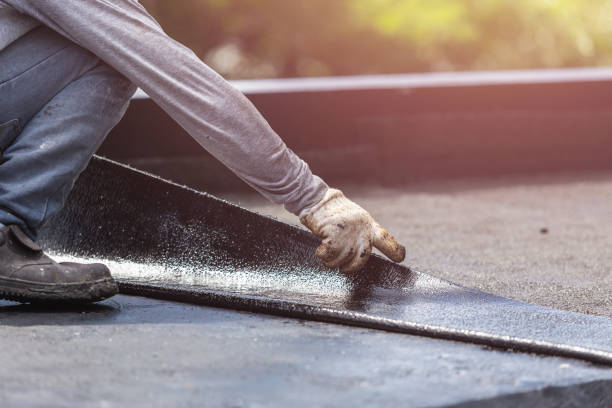
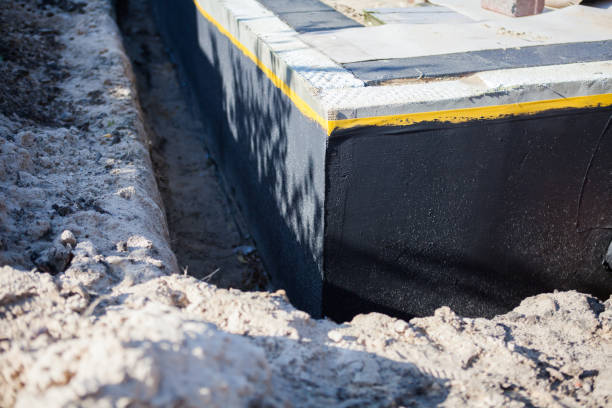
Foundation Crack Repair in Miller Place
Foundation crack repair in Miller Place, NY

Epoxy injection and polyurethane injection are the two primary methods for sealing and structurally repairing cracks in poured concrete walls. Epoxy injection produces a bond that is actually stronger than the surrounding concrete, making it the correct choice for cracks where structural re-bonding of the two faces is the goal. The process involves drilling a series of small ports along the crack at intervals calculated to ensure complete penetration, installing surface-mounted injection ports, sealing the visible crack face between ports with epoxy paste, and pumping two-component structural epoxy resin under low pressure until it fully fills the void and appears at adjacent ports. The resin cures within the crack to a solid, high-strength bond that is permanent and fully water-resistant.

Soil settlement beneath footings is an independent cause of foundation cracks that requires evaluation separately from the wall repair itself. When soil compresses or washes out from beneath a footing, that section of the foundation wall loses its support and the wall may develop diagonal cracks as the unsupported section deflects downward. In these cases, crack injection addresses the symptom while leaving the root cause unresolved. Our assessment includes a review of grading, drainage, and visible footing conditions to identify signs that settlement is active. Where settlement is a factor, we coordinate the repair approach to address both the crack and the soil condition that created it, preventing recurrence after the crack is sealed.

Foundation Crack Repair Services

From hairline seepage cracks to structural horizontal cracking, we have the right fix.

Epoxy Crack Injection

Structural epoxy injection bonds the two faces of a poured concrete crack together with a cured material that exceeds the tensile strength of the surrounding concrete, producing a truly permanent structural repair.

Polyurethane Injection

Expanding polyurethane resin fills irregular crack voids completely, including geometry that epoxy cannot fully penetrate, and cures to a flexible seal that tolerates minor seasonal wall movement without reopening.

Carbon Fiber Wall Reinforcement

Strap installation requires no excavation of the foundation exterior, minimal removal of interior finishes, and leaves a wall surface that can be painted over after the bonding adhesive cures.

Wall Anchor Systems

We install wall anchor systems in a pattern sized to the wall load and soil conditions, with each anchor location documented in your warranty documentation for future reference.

Stair-Step Crack Repair

We repair stair-step cracks by tuck-pointing the affected mortar joints with a compatible mortar mix matched to the existing wall, reinforcing corner crack locations, and applying a crystalline waterproofer to the repaired area to prevent water intrusion at the newly bonded joints.

Floor-Wall Joint Sealing

We seal the floor-wall joint with a combination of hydraulic cement at active leak points and a flexible polyurethane sealant bead over the sealed joint to accommodate minor movement without allowing the seal to crack again.

How We Fix Foundation Cracks

1

Structural Assessment

We measure every crack for width, orientation, and displacement, review the soil and drainage context, and classify each crack by type and severity before recommending any repair method.

2

Repair Method Selection

Written scope defines every material, method, and warranty term before you approve any work so there are no surprises on the invoice.

3

Professional Repair

Carbon fiber installations include verification of bond strength and strap spacing against the engineered design before the job is signed off.

4

Warranty Issuance

A written warranty is issued on project completion, covering the repair against reoccurrence under normal conditions for the warranty period stated in your contract.

What Miller Place Homeowners Say

★★★★★

We had a 14-foot horizontal crack in our block wall that two other companies dismissed as not serious. JCB Waterproofing and Construction came in, took actual measurements, and explained exactly why it needed carbon fiber straps immediately. The repair looks clean and the wall has not moved since.

Thomas & Karen R.
Miller Place, NY
★★★★★

The written quote was detailed and transparent. They explained what type of crack I had, why they were recommending epoxy over polyurethane, and what the warranty covered. That level of professionalism made the decision easy.

Sarah W.
Miller Place, NY
★★★★★

Our basement had a floor-wall joint that was allowing water in during every heavy rain. JCB Waterproofing and Construction sealed it properly with hydraulic cement and a polyurethane bead. No water in two rainy seasons since. Clean, professional work.

Mark D.
Miller Place, NY

Foundation Crack Repair FAQ

Are horizontal and vertical foundation cracks equally serious? +
No. Vertical cracks in poured concrete walls most often represent shrinkage or minor settlement and are primarily a water intrusion concern rather than a structural one. They respond well to injection repair and do not typically indicate ongoing structural movement. Horizontal cracks, by contrast, indicate that the wall is being pushed inward by lateral earth pressure and represent a structural condition that should be assessed by a qualified professional promptly. The distinction matters because the appropriate repair and the urgency of that repair are very different for each crack type.
When should I choose epoxy injection versus polyurethane injection? +
Epoxy injection is specified when the goal is structural re-bonding of the two faces of the crack -- the cured epoxy actually bonds to the concrete and produces a joint that is stronger than the surrounding material. It requires a dry crack condition and the right temperature range during injection for the bond to form properly. Polyurethane injection is specified for cracks that are actively admitting water, cracks where minor ongoing movement is expected, or crack geometries where the irregular void shape makes complete penetration with rigid epoxy difficult. The polyurethane foam expands as it cures to fill the void completely, and its flexible cure accommodates seasonal movement without cracking.
How much does foundation crack repair cost in Miller Place, NY? +
We do not quote foundation crack repair over the phone because crack type, length, accessibility, and root cause all affect the price. An honest quote requires seeing the crack. Our free on-site assessment takes the mystery out of pricing and gives you a written scope you can evaluate clearly.
What are the signs that my foundation crack is getting worse? +
The clearest signs of an active, worsening foundation crack are increased crack width since you last measured it, new cracks forming in locations where the wall was previously intact, visible inward bowing of the wall face, cracking that has propagated to interior floor surfaces adjacent to the wall, doors or windows in the above-grade structure that have begun sticking, and active water infiltration at a crack that was previously dry. Any of these signs warrant a professional assessment, not just monitoring.
How long does foundation crack repair take? +
A single crack injection repair is typically completed in two to four hours including port installation, injection, and patch work. Multiple crack projects on the same wall are usually completed in a single full day. Carbon fiber strap installation for a bowing wall requires a full day for a standard basement wall but leaves the space usable immediately after the epoxy adhesive cures, which typically takes 24 hours before the strap area can be finished.
Why is DIY foundation crack repair risky? +
DIY foundation crack repair products available at home improvement stores are surface sealers and hydraulic cements that address the visible face of the crack without penetrating or bonding the full depth of the wall. A surface seal on a crack that is actively moving will fail within a season or two as the movement reopens the seal. More importantly, DIY approaches do not include the structural assessment needed to determine whether the crack is a cosmetic issue or a sign of an active structural problem that requires reinforcement. Applying surface paint over a bowing wall crack, for example, delays the identification of a condition that should receive professional repair before it progresses further.
Miller Place is a hamlet and census-designated place (CDP) in the Town of Brookhaven, Suffolk County, New York, United States, on the North Shore of Long Island. Miller Place has been inhabited since the 17th century and is named for the Miller family that included many of its initial settlers. For most of its history, the community functioned as an agriculture-based society. Despite preserving much of its historic identity, changes in the 20th century have transitioned the hamlet into a desirable and densely populated suburban area. The population was 11,723 at the 2020 census.

Zip Codes in Miller Place, NY that we also serve: 11764

Cities Close To Miller Place, NY That We Also Serve


Foundation Crack Repair Express #1
★ 4.9 (120+ Reviews)
Dispatch Center, NY
Call +1-866-476-1348
Foundation Crack Repair Express #2
★ 4.9 (120+ Reviews)
Dispatch Center, NY
Call +1-866-476-1348
Foundation Crack Repair Express #3
★ 4.9 (120+ Reviews)
Dispatch Center, NY
Call +1-866-476-1348
Foundation Crack Repair Express #4
★ 4.9 (120+ Reviews)
Dispatch Center, NY
Call +1-866-476-1348
Foundation Crack Repair Express #5
★ 4.9 (120+ Reviews)
Dispatch Center, NY
Call +1-866-476-1348
Foundation Crack Repair Express #6
★ 4.9 (120+ Reviews)
Dispatch Center, NY
Call +1-866-476-1348

Expert Structural Repair for Every Crack Type in Miller Place, NY

Don't let a small crack become a structural emergency. Contact JCB Waterproofing and Construction for a written evaluation and quote in Miller Place, NY.

Call +1-866-476-1348 Now
Our Services in Miller Place, NY

☎
🟢 Techs On Duty in Miller Place, NY Call +1-866-476-1348